Loading the shop
Flower care
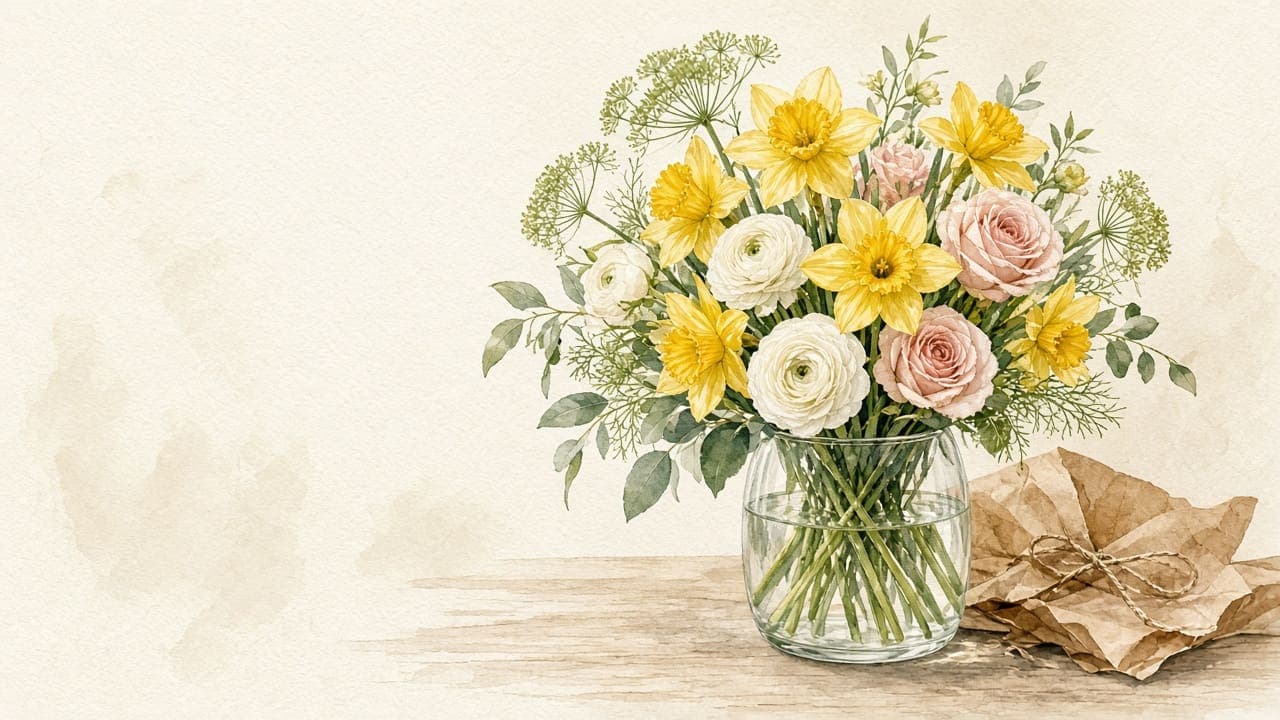
First, don't worry
Three things people ring us about that are actually signs of a fresh bouquet.
We cut and condition flowers so they reach you with life left in them. Lilies, alstroemeria, peonies and many roses arrive partly closed and open over the next few days. That is a bouquet that will last, not one that is behind.
Roses grow a ring of tougher outer petals, often a little crinkled or marked at the edge. We leave these guard petals on because they protect the bloom in transit. Once the flowers are home, ease them off gently from the base if you would rather not see them.
Our hand-tied bouquets come standing in their own water bubble with flower food already added, so they are fine for the first day or two exactly as they are. Keep them upright and somewhere cool. When you are ready for a vase, snip the bubble open over the sink.
The part that matters
This is what we do to every stem in the shop before it goes into a bouquet. Do the same at home and your flowers will thank you for it.
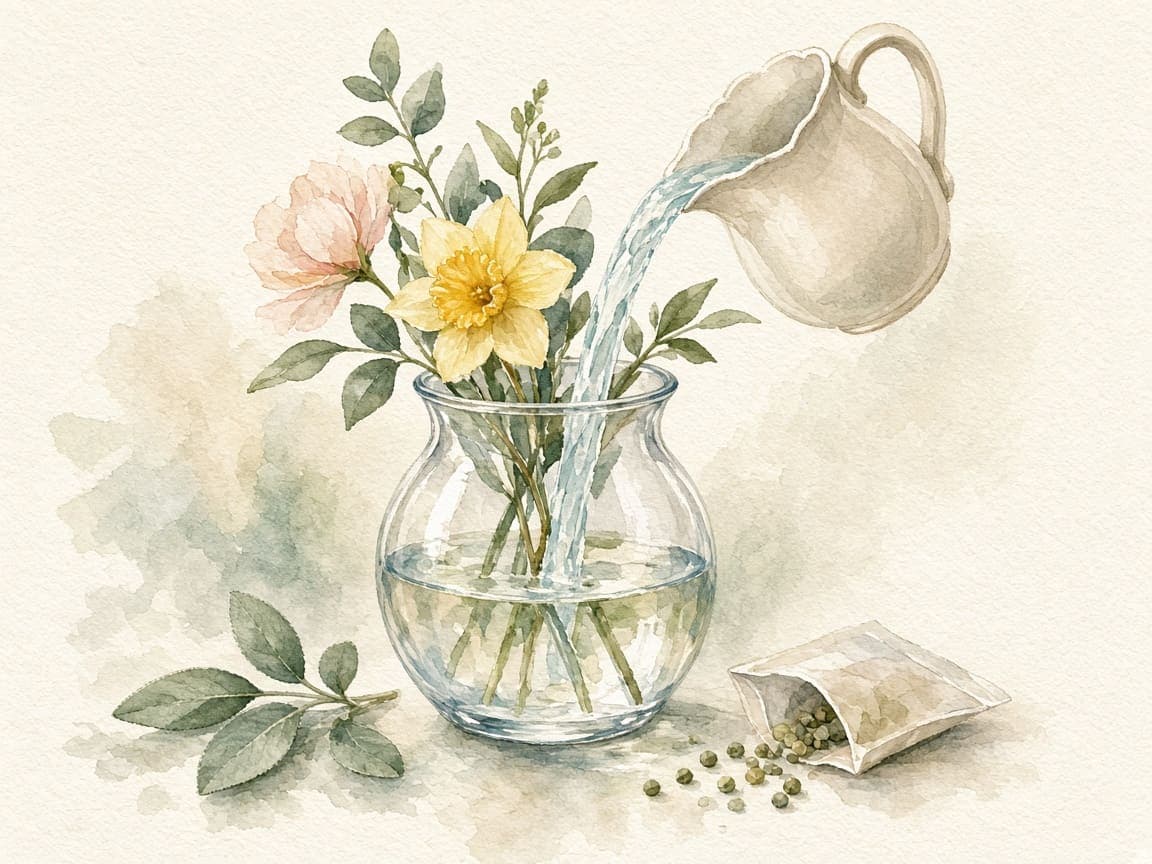
Step 1
Bacteria in the water is what shortens a bouquet's life, so cleanliness matters more than anything you add.
Florist tip: No sachet? Clean water changed every two days does nearly as good a job. Skip the lemonade and pennies. They feed bacteria more than flowers.
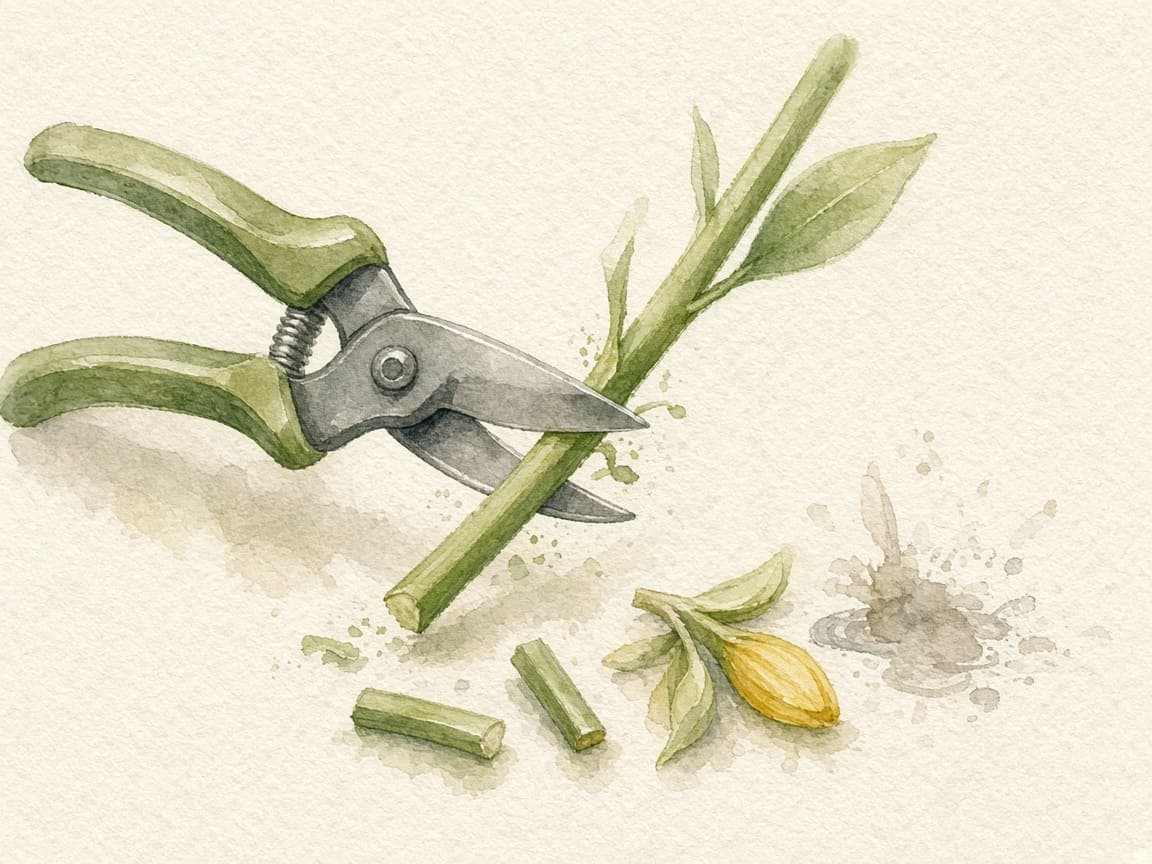
Step 2
Stems seal over within an hour of being out of water. A fresh cut opens them up so they can drink again.
Florist tip: Leave the tie on. Our hand-tieds are spiralled so they fall into shape on their own. Cut the string and the arrangement opens out.
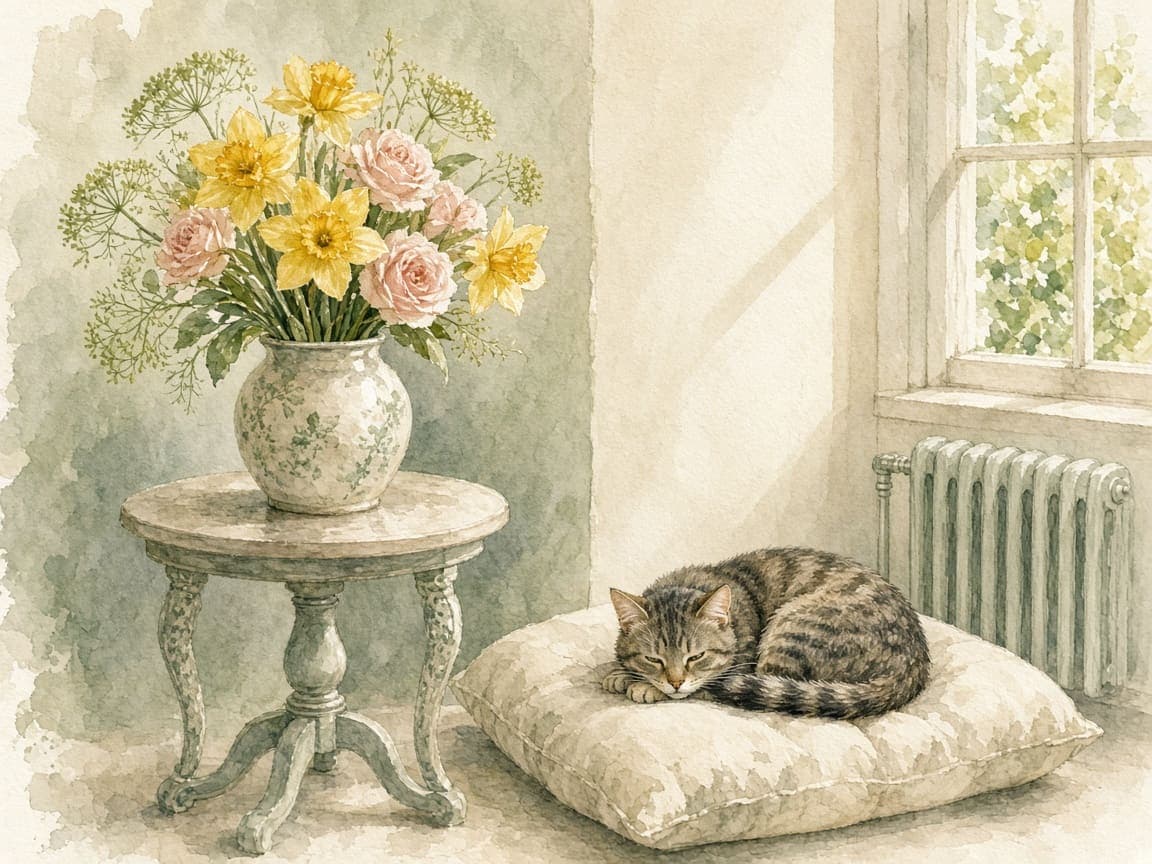
Step 3
Where the vase sits makes a bigger difference than most people expect. Cool and bright, but never in the sun.
Pour the old water away rather than topping it up, give the vase a quick rinse, and refill with fresh water and any flower food you have left. Take another centimetre off the stems while you are at it, and lift out any stem that has gone over. One spent stem will spoil the water for the rest. Two minutes, twice a week, is all it takes.
Know your stems
Most of what is in a Daff & Dill Florist bouquet is happy with the three steps above. A few have habits worth knowing about.
A rose that droops at the neck is usually airlocked, not finished. Recut the stem, wrap the head snugly in paper and stand it in deep cool water for a couple of hours. Most lift back up.
Pinch out the orange anthers as each flower opens. The pollen stains fabric and skin. Every part of a lily is toxic to cats, so keep them in a room the cat cannot reach.
Tulips keep growing in the vase and lean towards the light, so turn the vase every day. They drink a lot. Check the water level more often than you would for other flowers.
Daffodil stems release a sap that shortens the life of other flowers. If you are adding them to a mixed vase, stand them alone in water for a day first, and do not recut them once they are mixed.
Hydrangeas take in water through their heads as well as their stems. If one flags, dunk the whole flower head in cool water for twenty minutes and it will usually plump back up.
Big heads on soft stems. Keep the water shallow and very clean, recut every couple of days, and support the stems against the rim of the vase rather than letting them lean.
The long-lasters of most bouquets. Snip off any single flower that has gone over and the rest of the spray will keep going for another week or more.
Foliage usually outlives the flowers it came with. When the blooms are done, keep the eucalyptus. It dries beautifully and will scent a room for months.
Something not right?
Flowers are living things and every now and then one travels badly. If anything is not right when your bouquet lands, send us a photo within 24 hours and we will put it right, no fuss.
More questions? Our FAQ covers delivery, collection and ordering.